Five chapters. Real photos. No stock footage.
Radio, ONE News, the fight game, the club and the practice. Every photo is real, and where someone else wrote it down first, the source is linked. Start anywhere.
01
1996–2004
On air
Radio. Wellington, then London.
Radio has a wonderful way of exposing people who don't know what they're doing. Which made it an interesting career choice for me in 1996.
I'd just graduated from AUT with a communications degree, plenty of confidence and absolutely no experience behind a microphone.
But radio turned out to be the perfect training ground. No pictures to fall back on, no second takes and nowhere to hide. You learned to think on your feet, trust your instincts and make every word count.
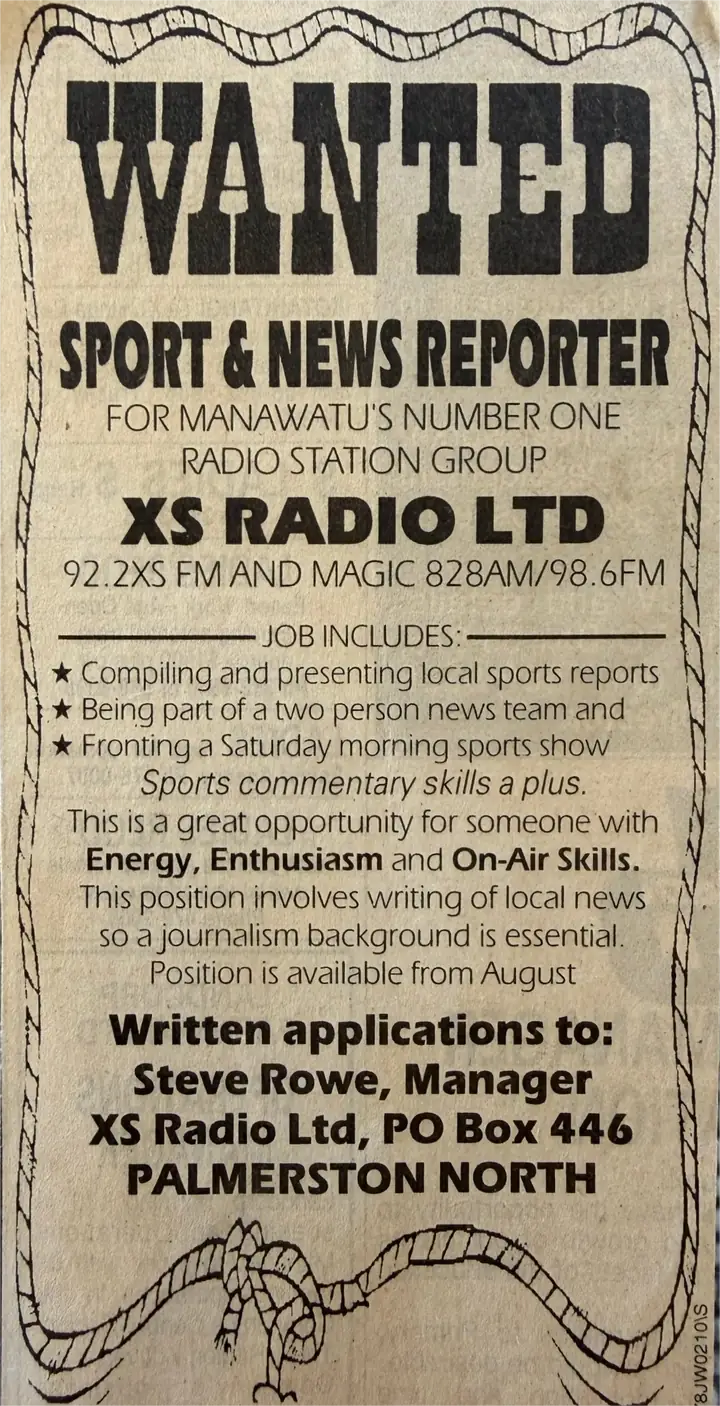
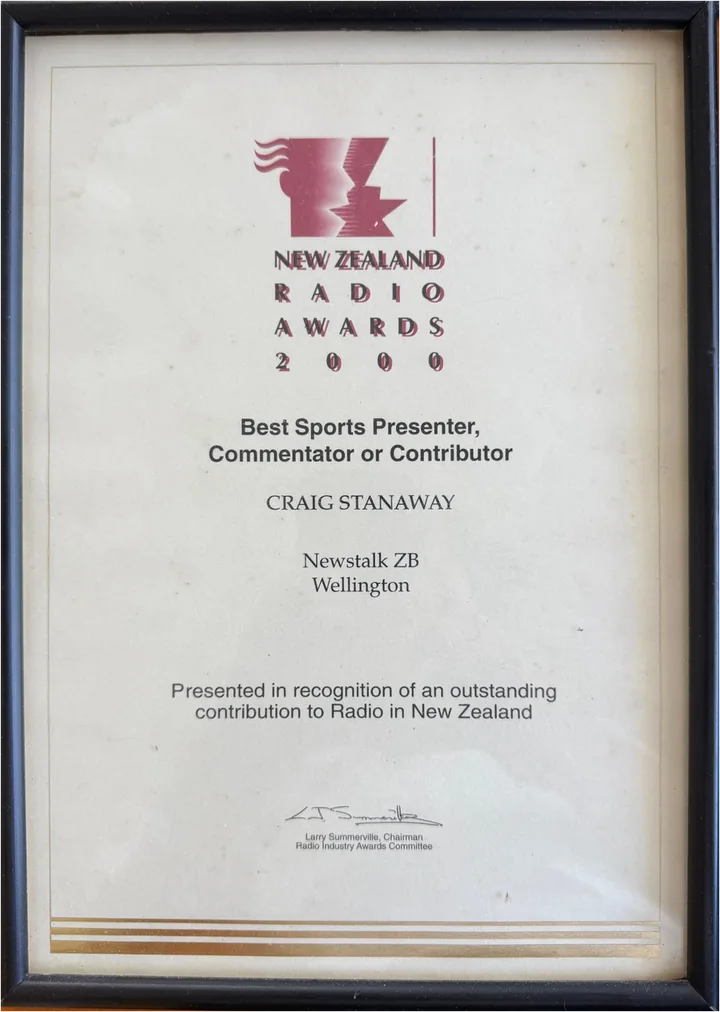
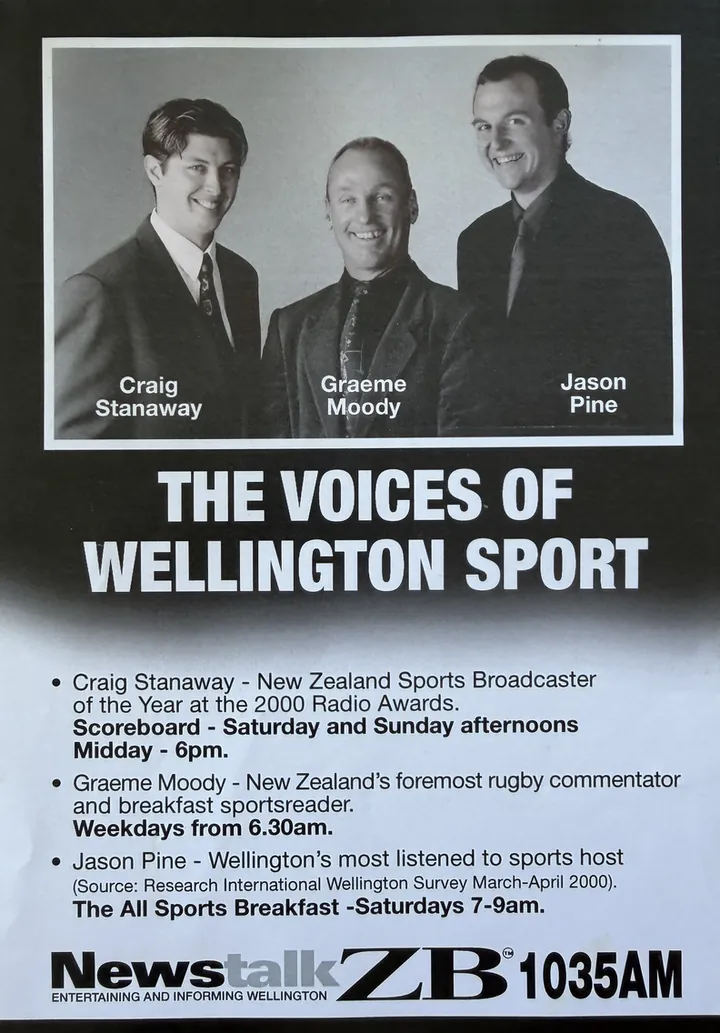
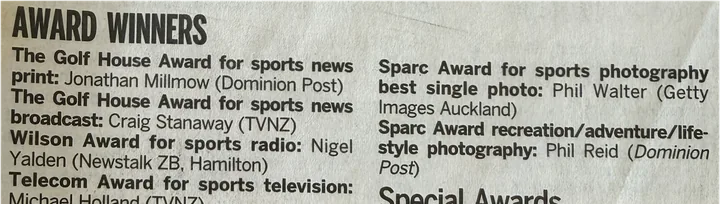
The recognition came early. I was a finalist for Best Sports Presenter, Commentator or Contributor at the New Zealand Radio Awards three years running: first in 1999 with Magic 828, winning the category in 2000, and making the finals again in 2001 with Newstalk ZB.
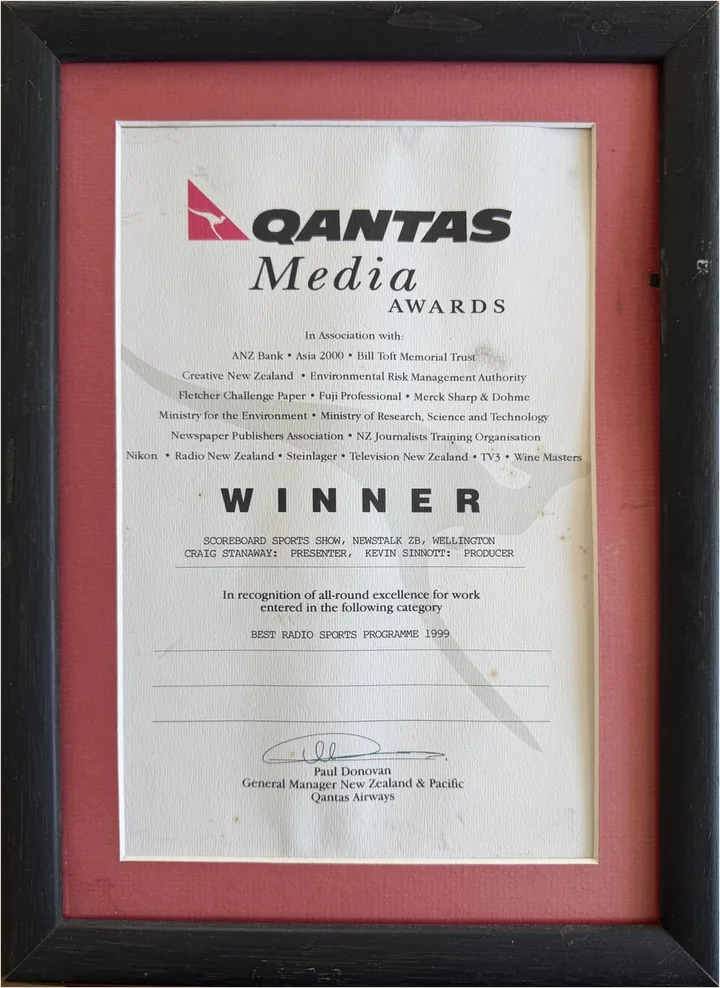
Along the way, the Scoreboard Show, which I hosted at Newstalk ZB in Wellington, won Best Radio Sports Programme at the 1999 Qantas Media Awards.
Then came London. Three years as assistant programme director at talkSPORT, Britain's national sports radio station, working directly under Kelvin MacKenzie, the legendary and notoriously combative former editor of The Sun and, for many years, one of Rupert Murdoch's closest and most influential lieutenants.
Kelvin wasn't a man who encouraged lengthy explanations, suffered fools gladly or worried much about hurting anyone's feelings. His programme meetings were an education in themselves.
After three years of those, a hostile interview seemed positively relaxing.
02
2005–2013
ONE News
Six international events: two Olympics, three World Cups, one America's Cup.


The rest of the roll


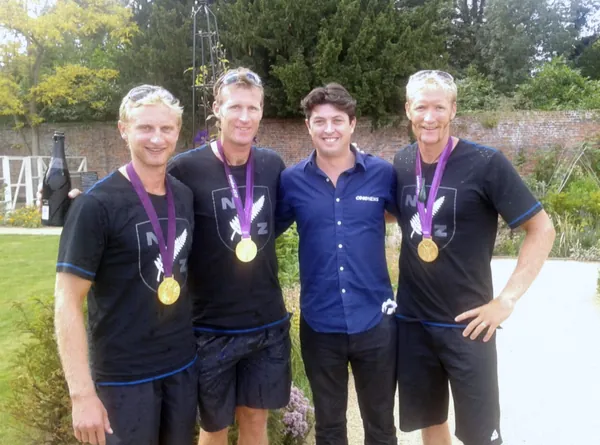
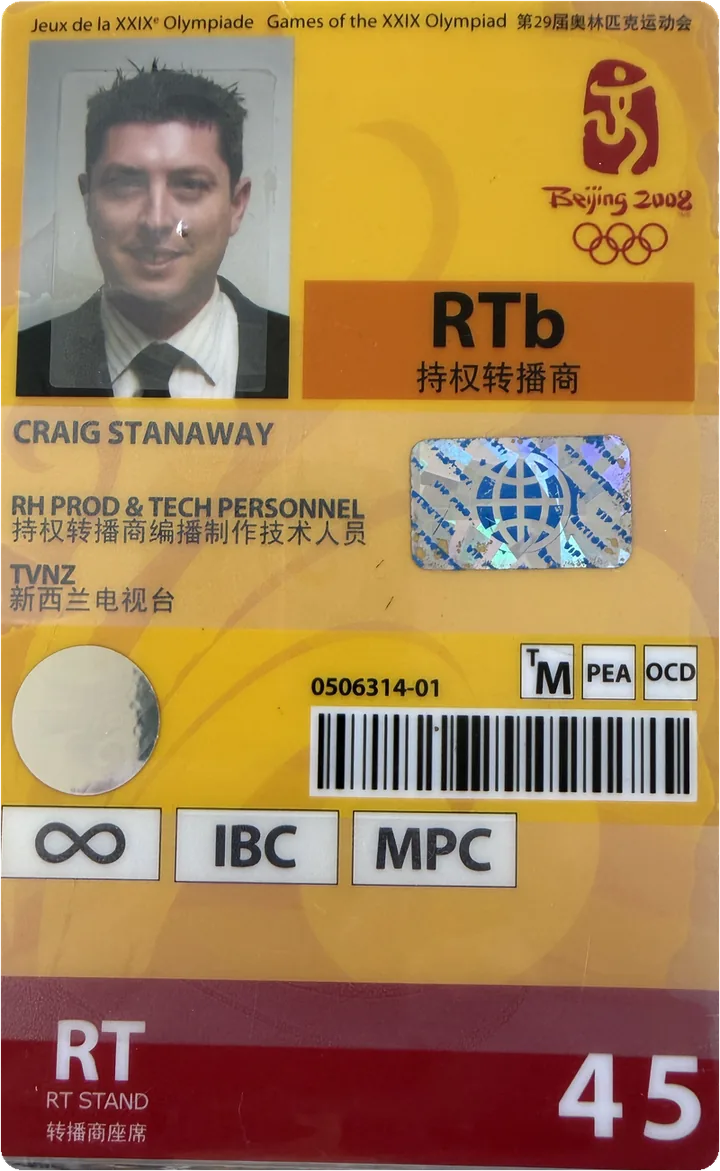
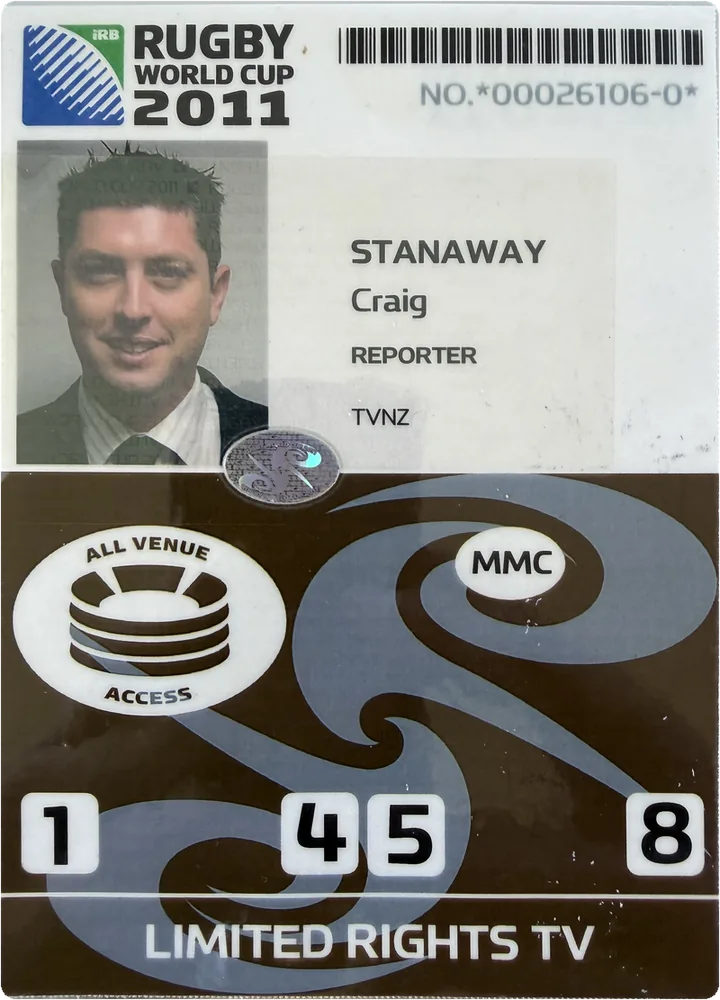
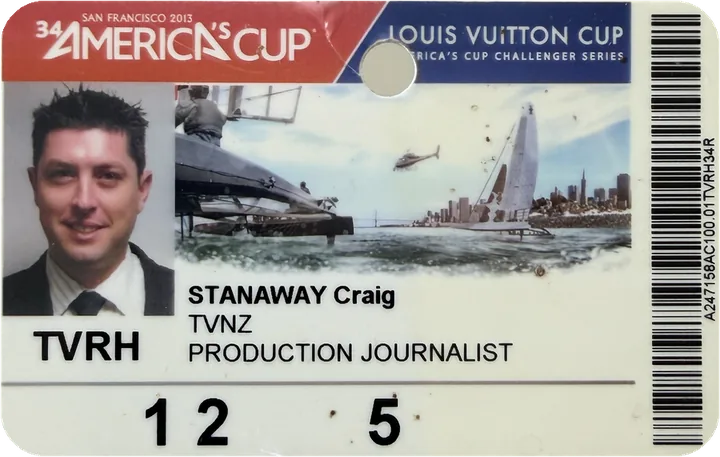
Nine years at TVNZ as a senior broadcast journalist. I spent a fair amount of that time in departure lounges, hotel rooms and places where something rather significant was happening.
For ONE News, I covered six major international sporting events: the Beijing and London Olympics, the 2008 Rugby League World Cup in Australia, the 2010 FIFA World Cup in South Africa, the 2011 Rugby World Cup in New Zealand and the 2013 America's Cup in San Francisco.
The most valuable lessons at TVNZ weren't necessarily learned at the world's biggest sporting events.
Television news is an unforgiving business. The six o'clock bulletin starts at six. It doesn't care if your interview ran late, your footage hasn't arrived or the person you desperately need to speak to isn't answering their phone.
You learn to make decisions quickly, ask the right questions and deliver under pressure.
You also learn something else. When organisations find themselves on the wrong end of a news story, it isn't always because they've done something wrong. Sometimes they've simply failed to understand how the media works.
03
2014–2018
The fight game
Joseph Parker, from Auckland to Cardiff.


The rest of the roll


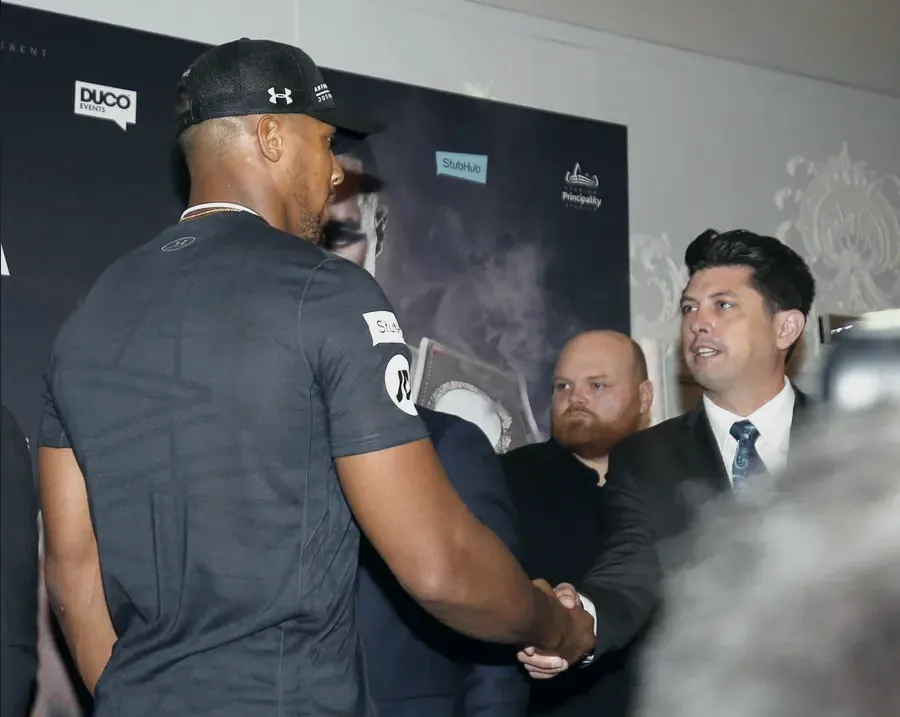
In 2014, I joined Duco Events as media and narrative director, working with a young heavyweight named Joseph Parker. He had enormous potential, a growing reputation and one fairly significant obstacle. No one knew who he was.
It meant building the story around Joseph, attracting sponsors, managing the media and making sure the right people were paying attention. Press conferences, international publicity, broadcast interviews and the occasional crisis. New Zealand, Australia, Germany, Britain and the United States. Often several countries before breakfast.
In December 2016, Joseph defeated Andy Ruiz Jr in Auckland to become WBO heavyweight champion of the world. That same year, he was the top trending New Zealander in Google's Year in Search.
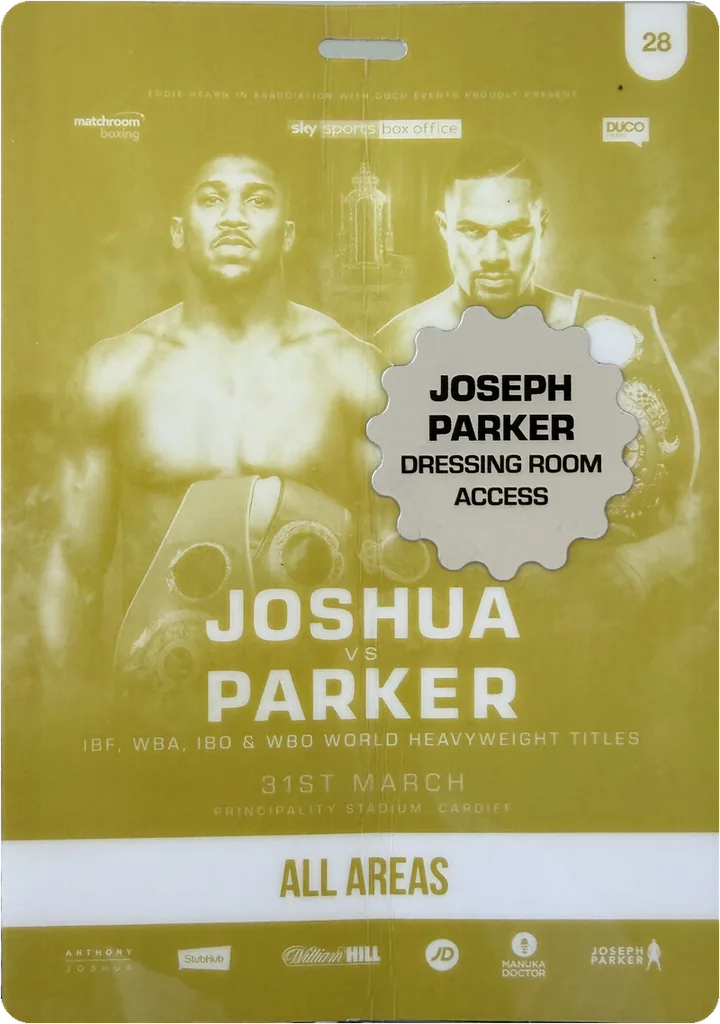
Two years later, he was walking into Principality Stadium in Cardiff to face Anthony Joshua in a record-breaking world heavyweight title unification fight. It generated more money that one night than any New Zealand sporting event in history.
The experience reinforced something I'd learned in broadcasting. Talent and achievement matter enormously, but so does the story surrounding them.
I've worked with Don King and all the world's premier boxing promoters and when it comes to media, Craig works to an international standard as high as any I've seen in more than 50 years of boxing.
 Col. Bob SheridanCalled Muhammad Ali's Rumble in the Jungle, Thrilla in Manila and Mike Tyson's biggest fights
From the tape
04
2019–2023
The club
The NZ Breakers, a pandemic and a night for Starship.
$656,700raised for the Starship Foundation in one night


Then came the New Zealand Breakers, where I worked as media manager alongside my own business, and created, wrote and directed the club's documentary series, #UNBREAKABLE.
One of the highlights was travelling with the team to the United States for two games against NBA opposition. I was there when the Breakers took on the Memphis Grizzlies in Memphis and Steven Adams' Oklahoma City Thunder.
Then COVID arrived, and the job became something else entirely.
With the Breakers effectively locked out of New Zealand, I moved to Australia and lived alongside the players, coaches and support staff for two seasons.
In 2021, we spent 154 days on the road, played 29 consecutive games away from New Zealand and relocated our home base nine times. The following season, we played all 28 games in Australia without setting foot on a New Zealand basketball court.
That's 57 games in Australia across two seasons, interrupted by just seven games back in Auckland.
By the end of it, we were all in fairly urgent need of a holiday, a therapist or a completely different career. Preferably one that didn't involve airports.
Throughout it all, my responsibility was to keep sponsors, supporters and the media connected to a team that had effectively disappeared from its own country. Living with the players gave me a unique perspective on the personal toll of professional sport and the importance of telling the stories that happen away from the court.
In 2020, I also co-created a celebrity basketball game and helped negotiate the contracts that brought it together. Six60, Irene van Dyk and Roger Tuivasa-Sheck were among the stars on the night.
We attracted 6,254 spectators to Spark Arena and raised $656,700 for the Starship Foundation.
The experience taught me plenty about loyalty, relationships and communication under extraordinary pressure.
After coaching for 15 years, in three different continents, Craig has been the best media manager I have worked with.
From the tape
05
2018–now
The practice
New Zealand businesses, and a fighter who called early.
Since 2018, I've run my own communications and media consultancy. Just me. No account managers, no layers of management and no being handed off to someone you've never met once the contract is signed.
The person you talk to at the beginning is the person who does the work.
These days, most of my clients are New Zealand businesses operating well outside the sporting world. A mortgage advisory firm that wanted to turn its YouTube channel into something people actually watched. An advocacy group challenging some very large invoices. Financial services firms that wanted the public to understand what they do and why it matters.
Different industries, different challenges, but much the same principle. Understand the audience, find the story worth telling and give people a reason to pay attention.
Occasionally, sport still comes calling.
In 2023, I took a call from a relatively unknown Kiwi UFC fighter. He had big ambitions and wanted to be ready for the cameras before the world started paying attention.
On 11 April 2026, that same fighter knocked out Jiří Procházka in the first round to become the UFC light heavyweight champion. A title he still holds.
His name? Carlos Ulberg.
The cameras certainly know who he is now.
Which is rather the point of good communications. You don't wait until everyone's watching to work out what you want to say.


Were you in the room?
If you've got a photo from any of these chapters, a press box in 2008 or a fight week in 2016, I'd love to see it. The best ones go in the archive, credited.
More tape lives on the YouTube channel